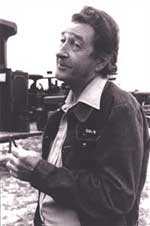
Jim Northrup: With Reservations
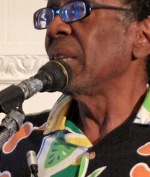
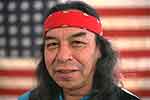
Jim Northrup: With Reservations is a wild trip through Indian Country.
Follow the link below to learn
more or to order the video. Learn more
Welcome to thecie dot org. We make poetic media with people of all ages from all over
the world for everyone.
COLD MOUNTAIN is a half hour film portrait of the Tang Dynasty Chinese poet Han Shan, a.k.a. Cold Mountain. Recorded on location in America, China and Japan, Burton Watson, Red Pine, Jim Lenfestey and the legendary Gary Snyder describe the poet's life and recite poems.
Co-directed by Mike Hazard and Deb Wallwork, the music is by the internationally renowned pipa player Gao Hong and animations are by John Akre. A project of The Center for International Education, the film has been supported by the Outagamie Foundation, the family of John W. Brower and the Bush Foundation.
Deb Wallwork writes, "Cold Mountain is a rollicking, tasty film filled with poetry, colorful characters, Zen wisdom, and witty commentary. The film gives us glimpses of that mysterious--some say crazy, some say enlightened--figure, Han Shan, who left the dusty world to become a hermit and a poet, and in so doing wrote the intimate and inspired lines that speak to us today."
Mike Hazard adds, "One way to look at the film is to see that literally everyone in the film is channeling the spirit of Han Shan: the Mandarin of Jin Hua, the trickster animations of John Akre, the street singer, the rice thrashers, the Butterfly Woman, the four poetical guides, the monks in the temple kitchen, the bats in the cave, Gao Hong's pipa, even the cicadas compose a richly layered portrait of Cold Mountain."
Here are four of Han Shan's 300 poems.
Born thirty years ago
I've traveled countless miles
along rivers where the green rushes swayed
to the frontier where the red dust swirled
I've made elixirs and tried to become immortal
I've read the classics and written odes
and now I've retired to Cold Mountain
to lie in a stream and wash out my ears
--translated by Red Pine
Here we languish, a bunch of poor scholars,
Battered by extremes of hunger and cold.
Out of work, our only joy is poetry:
Scribble, scribble we wear out our brains.
Who will read the works of such men?
On that point you can save your sighs.
We could inscribe our poems on biscuits
And homeless dogs wouldn't deign to nibble.
--translated by Burton Watson
I can't stand these bird songs
Now I'll go rest in my straw shack.
The cherry flowers are scarlet
The willow shoots up feathery.
Morning sun drives over blue peaks
Bright clouds wash green ponds.
Who knows that I'm out of the dusty world
Climbing the southern slope of Cold Mountain?
--translated by Gary Snyder
Dust, this life is lost in dust.
Like bugs, bugs in a bowl
we circle, daily, circle
unable to get out.
We're nothing like the gods, nothing.
Our sorrows never end, ever.
Years and months flow like water
when, all of a sudden, we're old.
--version by Mike Hazard
GEORGE C. STONEY, a veteran maker of documentaries, lifelong media activist and professor of film at New York University, is subject of a biographical documentary in progress.
This video celebrates George's late companion, Betty Puleston.
Legendary in the field of nonfiction film, Stoney is perhaps most famous as the "godfather of public access to cable television," a title he characteristically declines. Still, his advocacy for a citizen's right to use the new media for public expression helped create the federal legislation which now enables public access.
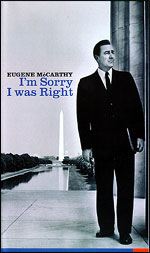
His students are everywhere: Paul Barnes (chief editor for Ken Burns), Cheryl Furjanic (SYNC OR SWIM), Jim Brown (THE POWER OF SONG: PETE SEEGER), John Whitehead (MAKE 'EM DANCE), and Mike Hazard (I'M SORRY I WAS RIGHT) to name only a few.
The nonagenarian Stoney teaches that "films should do, not just be."
Stoney made the documentary Uprising of '34 (1995) with Judith Helfand and Susanne Rostock. It documents the textile strikes in the South in 1934. The texture of the piece is like a textile.
Stoney is working with David Bagnall on a major portrait of the late Brazilian educator and agitator, Paulo Freire. Freire taught culture is everything humans make, from a shoe to a song.
You can also see two early films of Stoney's on line. Booked for Safekeeping (1960) was made to train police officers in the assistance and management of mentally ill and confused persons.
Palmour Street (1949) was Stoney's first film. One reviewer called it "a curious hybrid of soap opera, history lesson, race relation film, melodrama and Coronet instructional film about a poor family growing up in the South".
The Stoney Project is directed by Mike Hazard, who has been awarded a 2009 Bush Foundation Fellowship to support this piece. Stay tuned.
Thursday, April 23, 2009
GREY MATTERS is the last in a series of studies of the spectrum, color by color. Like RED EYE, AGENT ORANGE, FOOL'S GOLD, THE EVERGREEN MAN, THE BLUEBIRD OF HAPPINESS and SHRINKING VIOLET, it is a multimedia montage of poems, pictures and profound objects by yours truly, Media Mike Hazard.
Free for all, come see GREY MATTERS in the St. Paul Art Crawl, Friday 6-10pm April 24, Saturday 12-8pm April 25, and Sunday 12-5pm April 26, 2009 at Lowertown Lofts, 255 Kellogg Boulevard E, St. Paul. Or call 651.227.2240.
THE WAR WITHOUT END
Crickets sing the fall away.
The computer whines whenever it is on.
White noise, it is.
In a black hole, we are.
Lately, I don’t even want a piece of me.
FOOD CHAIN
A strident black crow struts.
He beaks the grass for breakfast.
I beak the bird like a poem, a feast.
SNOW JOB
Shoveling black Tiger Jack's white snow
in the midst of the first blizzard of the season,
I thought about how he prefers to call himself a Negro.
I scraped and skimmed that concrete fact, row on row.
When I was almost through, it was time to begin anew.
Black & white: a wise crow in the cold snow.
Black & white: history deeper than deepening snow.
Black & white: in old photos bold stories show & tell
of civil rights and wrongs, of heaven and hell,
of blacks and whites singing as one under the sun.
Shoveling black Tiger Jack's white snow
in the midst of the first blizzard of the season,
I thought about how he prefers to call himself a Negro.
This is a video about my old neighborhood in Philadelphia, Longford Street, one of the first integrated housing developments in the country. It was created as part of the Precious Places project of Scribe.